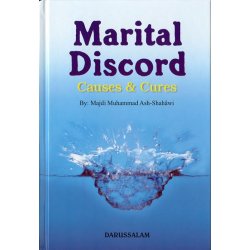
Books on marriage usually offer either an ideal or a set of rules. This one is structured like a diagnosis: what a sound marriage rests on, what commonly goes wrong, and what to do about it once it has.
The Foundations
The first section covers what a marriage is built on before any difficulty arises. Choosing well — and the principle that religion should be the primary factor in that choice, which is the Prophet's ﷺ own instruction and the one most often set aside in practice.
From there it works through the duties each spouse owes the other and the rights each holds: the husband's obligations of provision, kindness and patience; the wife's obligations within the household; the recommendation that a man help his wife with the work of the home, following the Prophet's ﷺ own example; and the discipline of overlooking faults rather than cataloguing them.
Intimacy and its rights are treated as part of the marriage contract rather than as a separate matter, as the classical works treat them.
The Common Problems
The second section names what couples actually complain about — the recurring sources of discord, in the forms they usually take rather than in the abstract. Naming them is more useful than it sounds: a good deal of marital difficulty persists because neither party can articulate what the problem is, only that there is one.
Resolution
The final and longest discussion is on how disagreements are dealt with and settled: the sequence Islam prescribes, the role of family arbitration, what patience is required of each side, and where the limits lie.
A Note on Reading It
The book works from the classical fiqh literature on marriage, and it states rights and duties in the direct terms those sources use. Read it as a description of mutual obligations — which is what the Shari'ah establishes — rather than as leverage for one party over the other. Every right named here has a corresponding duty attached to someone, and the book is at its most useful when both spouses read it.
Related Reading



 (3)
(3)