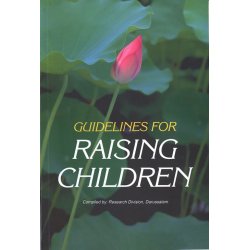
Children are among the greatest trusts Allah places in a person's hands, and raising them is one of the few responsibilities that cannot be delegated. This handbook sets out what Islam actually asks of a parent, from the day a child is born to the day he becomes accountable.
The Principle It Keeps Returning To
Children learn far more from watching their parents than from being instructed by them. A father who tells his son to pray and does not pray himself has taught him something — just not what he intended. The book is direct about this: inconsistency between a parent's words and actions confuses a child and quietly weakens his attachment to the religion.
So the first work is on the home. An Islamic household built on sincere faith, mercy, honesty, patience, good character and consistent worship raises children almost by itself. Instruction supplements that; it cannot substitute for it.
What Is Covered
- The rights a child holds over his parents from birth
- Tahneek, Aqiqah and choosing a good name
- Teaching the greeting, the prayer and the basics of worship
- Building manners (Akhlaq) and the habits behind them
- Encouraging modesty at the right age and in the right way
- Guarding children from harmful influences and choosing good companions
- Instilling respect for parents, and for elders generally
- Establishing a firm Islamic identity early, before it is contested
Practical Rather Than Theoretical
The advice is drawn from Qur'anic verses and authentic Ahadith throughout, but the register stays practical — developing a child spiritually, morally and socially without turning parenting into a specialist subject. It is short, which is deliberate: the parents who need it most have the least time to read.
Useful for new parents, experienced ones reviewing their approach, grandparents, Islamic school teachers and anyone advising a family. It suits family discussion, parenting classes and masjid libraries as much as private reading.
Related Reading



 (2)
(2)