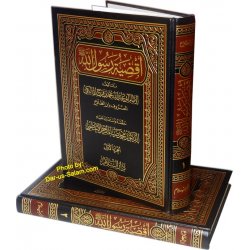
The Prophet ﷺ was not only a Messenger and a teacher. He was a judge, and people brought him their disputes — over property, inheritance, debt, marriage, injury and accusation — and he decided them.
This two-volume work gathers those decisions.
Why They Are Studied Separately
Because a judgment is a different kind of evidence from a general statement. A ruling issued in a concrete dispute shows the law applied to facts: what was claimed, what was proved, what standard of evidence was required, and what the outcome was.
The foundations of Islamic judicial procedure are derived largely from this material — the burden of proof, the oath, the treatment of testimony, the handling of circumstantial evidence, and the principle that a judge's ruling does not make lawful what is unlawful in reality.
Who It Is For
Students of fiqh and of Islamic legal theory. Anyone serving as an arbitrator in community disputes, which a great many imams effectively do. Researchers in Islamic law. It is also unexpectedly absorbing reading — each case is a human situation with a decision at the end of it.
Two volumes. Arabic only.
Related Reading
الوصف بالعربية
أقضية رسول الله صلى الله عليه وسلم في مجلدين.
ولم يكن النبي صلى الله عليه وسلم مبلّغًا ومعلّمًا فحسب، بل كان قاضيًا تُرفع إليه الخصومات — في الأموال والمواريث والديون والنكاح والجنايات والدعاوى — فيقضي فيها.
وإفراد هذه الأقضية بالتصنيف له وجه ظاهر: فالقضاء نوع من الدليل غير الخبر العام، إذ يُري الحكم مطبَّقًا على واقعة: ما ادُّعي، وما ثبت، وما اشتُرط من البيّنة، وما انتهى إليه الأمر.
ومن هذه المادة استُنبطت أصول القضاء في الإسلام: البيّنة على المدّعي واليمين على من أنكر، وأحكام الشهادة والقرائن، وأن قضاء القاضي لا يحلّ حرامًا في نفس الأمر. مرجع لطلبة الفقه وأصول القضاء ولمن يتولّى الإصلاح بين الناس.