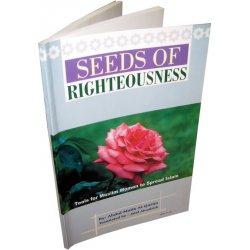
The obstacle for most people who want to do something is not willingness. It is not knowing what to do. Seeds of Righteousness removes that obstacle by listing nearly two hundred things that other women have already done.
Why They Are Called Seeds
Because that is how each one started. Every item in this book was sown by a Muslim sister who tended it until it grew and produced fruit — some of it visible to her, much of it not. A book lent. A neighbor invited. A class started in a living room. A question answered patiently. A gift given at the right moment.
None of these looks like da'wah while it is happening. Collected together, they are precisely what da'wah consists of for most people most of the time.
What Makes the Collection Useful
These are not proposals. They are records of things that worked, which is a different kind of encouragement — a reader can see that an ordinary woman with an ordinary week found this possible, and the thought I could do that one arrives on its own.
The range is deliberately wide, from ideas costing nothing and taking a minute to those requiring sustained effort, so that a reader in any circumstance finds something within reach.
The Invitation
The book is addressed particularly to the sister who has not yet planted a Seed of Righteousness — who wants to work for the sake of Allah and has been waiting to know how. It sets out the seeds and asks her to choose one, in the hope that Allah accepts it from her, and with the Hereafter kept plainly in view.
Who It Is For
Muslim women looking for a place to start. Sisters' halaqahs and study circles, where it works well as a source of group projects. Islamic school teachers and youth leaders. Anyone who has felt the urge to be useful and has not known where to put it.
Related Reading



 (1)
(1)