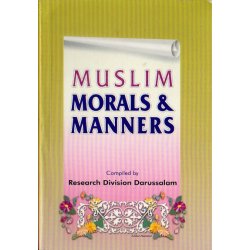
The Prophet ﷺ said he was sent to perfect noble character. Not to add rituals to existing ones — to perfect character. That places akhlaq nearer the center of the religion than most Muslims treat it, and this small book is a working guide to what it requires.
What It Covers
Conduct across the relationships an ordinary day contains: parents, spouse and children; neighbors, whose rights the texts emphasize repeatedly; colleagues and business dealings; guests and hosts; and strangers, including those who are not Muslim. Alongside these, the etiquette attached to worship, to speech, and to the ordinary business of eating, traveling, greeting and asking permission.
The principle running underneath is that Islamic manners are not politeness with a religious label. They are acts of worship in their own right, rewarded as such, and neglected at a cost.
Why the Pocket Format Suits This Subject
Manners are needed in the moment they are being tested — when a neighbor is difficult, when a conversation turns to backbiting, when someone is owed a response you do not want to give. A book on the shelf at home does not help then. A book in a pocket, opened for two minutes on a commute, gradually does.
The compression is deliberate. This is a concise guide rather than a comprehensive treatment, and it earns its place by being present.
Who It Is For
Muslims wanting practical guidance rather than theory. New Muslims learning how the religion shapes ordinary interaction. Travelers and commuters. Parents and teachers, who can work through a section at a time with children. Also useful for non-Muslims curious about Islamic ethics — it is short, specific, and describes conduct rather than argues doctrine.
Related Reading



 (8)
(8)