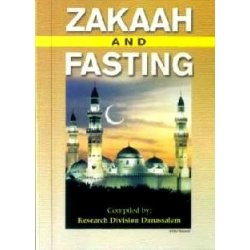
Two pillars of Islam in a book that fits in a pocket. Compiled by the Dar-us-Salam Research Division from the Qur'an and the authentic Sunnah, and deliberately kept to the essentials rather than the scholarly debate.
Zakaah
The section on Zakaah covers the conditions that make it obligatory, the categories of wealth it falls due on, the nisab threshold and how the year is counted, and the eight categories of people entitled to receive it.
Its recurring emphasis is that Zakaah is worship, not taxation. It purifies wealth and the heart together, expresses gratitude for what was given, builds compassion in the giver, and strengthens the community by moving wealth to where it is needed. A person who understands it that way calculates it honestly; a person who treats it as a levy looks for the smallest defensible figure.
Fasting
The second section covers the fast of Ramadan: its virtues, the conditions of a valid fast, who is exempt and on what basis, what must be made up afterwards, and the etiquette expected of a fasting person.
Here too the point is repeated that fasting is not the mere avoidance of food and drink. It is a means to Taqwa, achieved through patience, self-restraint and the discipline of the tongue and the limbs. Without those, the hunger has been endured for nothing. The book encourages increased recitation, dhikr, supplication, charity and righteous deeds through the month.
Why the Size Is the Feature
Both subjects generate questions at inconvenient moments — standing in a kitchen at noon, or working out a Zakaah figure at a desk. A pocket book gets consulted then; a fiqh volume gets consulted eventually, if at all. It suits new Muslims, families, Ramadan study circles and Islamic schools, and is cheap enough to distribute before the month begins.
Related Reading