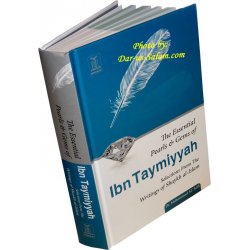
Ibn Taymiyyah wrote more than most people could read in a lifetime, much of it in a technical register aimed at scholars and much of it under the most difficult of circumstances — a good deal of it in prison. For an ordinary reader wanting to benefit from him, the problem has never been availability. It is knowing where to start.
Dr. Muhammad Al-'Arifi solves that by selecting.
Who Ibn Taymiyyah Was
Shaykh al-Islam Ibn Taymiyyah is among the greatest scholars and reformers in Islamic history. He emerged at a time of great turmoil and confusion to call Muslims back to the path of the Qur'an and Sunnah — the path of the Prophet ﷺ and of the early generations of this Ummah, the Salaf.
His books describe that path, and they engage directly with the arguments of the Muslim philosophers and of the Batini and Rafidi groups, identifying the flaws in each.
Why the Selection Is Timely
The compiler's argument is that his era and ours resemble each other more closely than the seven centuries between them suggest. The Ummah is again in turmoil, facing decline and confusion, looking for a way out — and, after trying a long succession of isms and ideologies, and after exposure to propaganda and corrupt ideas from several directions, beginning to recognize that the route out runs back through the path of the Salaf.
Whether or not a reader accepts that diagnosis, the arguments Ibn Taymiyyah made are still being had, which is the more modest and more demonstrable version of the same claim.
Who It Is For
Readers who have heard Ibn Taymiyyah cited constantly and never read him. Students of knowledge wanting an accessible entry point before the primary works. Anyone interested in how a scholar responds to a period of confusion from inside it.
Related Reading



 (5)
(5)