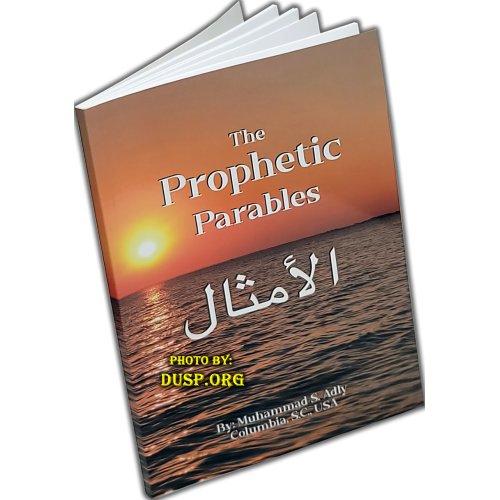
The word mathal in Arabic — "parable" or "similitude" in English — implies a characteristic, likeness or equivalence that one thing shares with another. Because of the similarity between the two, citing one of them in the form of a parable is especially useful in explaining the other.
Parables provide approximate visual or metaphorical images, and are thus uniquely capable of facilitating in-depth understanding.
Why the Prophet ﷺ Taught This Way
Because an abstraction is forgotten and an image is not.
Told that good company benefits a person and bad company harms him, a listener agrees and moves on. Told that a good companion is like a seller of musk — you will either be given some, buy some, or at least find a pleasant scent — and a bad one like a blacksmith's bellows, which will burn your clothes or leave you with the smell, the listener remembers it for life.
Allah Himself coins parables throughout the Qur'an, and the Prophet ﷺ followed that method.
What the Book Covers
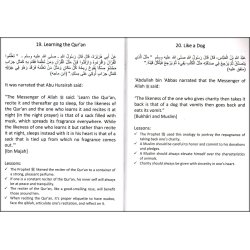
The parables themselves and what each establishes: the two companions, the rain falling on different soils, the person who abandons the prayer, the believer among people, the man building a house and leaving one brick.
Understanding what each was answering is what turns a memorable image into a lesson that can be applied.
Who It Is For
Any Muslim, and particularly anyone who teaches or gives khutbahs — the parables are the material listeners retain.
Related Reading



 (1)
(1)