Stories about the Prophets are everywhere. Reliable ones are not. Over the centuries the accounts picked up material from Israelite traditions and popular storytelling, and much of what circulates today — in children's books, in khutbahs, in family retellings — has no basis in revelation at all.
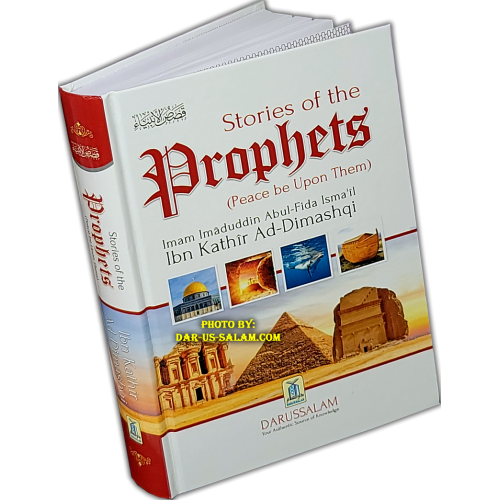
This is the standard corrective. Al-Hafiz Ibn Kathir (d. 774 AH), the exegete and historian, compiled these narratives from his own Al-Bidayah wan-Nihayah, supporting every event with the Qur'an and the Sunnah of the Prophet ﷺ. Where other sources were needed for historical continuity, he compared them against what is established rather than passing them on unexamined.
"There is, indeed, in their stories a lesson for people endowed with understanding. It is not any invented tale, but a confirmation of what went before it, and a detailed exposition of all things, and a guide and a mercy to people who believe." (Surah Yusuf 12:111)
What You Get
The Prophets in chronological order, from Adam to 'Isa عليهم السلام — Nuh, Hud, Salih, Ibrahim, Lut, Shu'ayb, Isma'il, Ishaq, Yusuf, Ayyub, Yunus, Musa, Dawud, Sulayman, Zakariyya, Yahya and the rest. Their calls, the responses they met, the trials they endured and what became of the peoples who rejected them.
The chronological arrangement gives the book the character of a history, and it produces the effect the Qur'an itself points to: the same message delivered again and again across thousands of years, met with the same objections, and vindicated the same way.
Sourcing You Can Rely On
The narratives adhere strictly to the methodology of Ahlus Sunnah wal-Jama'ah and are free of fabricated reports — which is precisely why this is the version to put in front of children and students. A story told once tends to be believed for life, and it is worth the effort to make sure the first telling was sound.
Who It Is For
Families reading aloud. Islamic schools, weekend academies and homeschool curricula. Students of Islamic studies. Readers who know the Prophets by name and little else. The English translation keeps the clarity and scholarly rigor of the Arabic while remaining accessible to younger readers, and the 6 x 9 inch hardback is built for the repeated handling a family book gets.
Available Editions
| Edition | Size | Printing | Best For |
|---|
| Full Color Edition | 6.85 x 9.7 in | Full color | Illustrated reading, family and classroom use, gifting |
| Standard Edition (this item) | 6 x 9 in | Black & white | Reading through, study, buying in quantity |
Related Reading



 (31)
(31)