History is among the most effective means a nation has of setting itself on a course toward progress, and of avoiding the path that leads to disgrace. Muslims possess one of the most remarkable histories on record and are, for the most part, strikingly detached from it.
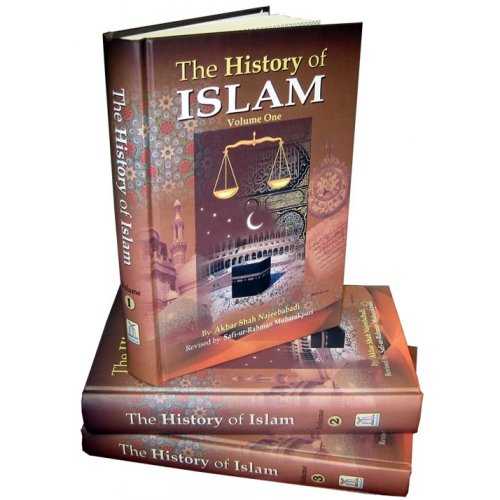
This three-volume set exists to close that gap for English readers — and to correct a second problem alongside it. Most Islamic history available in English was written by authors working from outside the tradition and, often, with settled assumptions about it. This work presents the events and their actual causes from within.
The Three Volumes
- Volume 1 — Arabia in the Age of Ignorance (Jahiliyyah), the life of the Prophet ﷺ, the Hijrah, and the era of the four Rightly Guided Caliphs
- Volume 2 — the Umayyad and Abbasid caliphates: expansion outward, and the internal challenges that came with it
- Volume 3 — Muslim Spain, the Mongol invasions, the dynasties of Persia, Egypt and Syria, the Mamluks, and the rise of the Ottoman Empire
Sources
Najeebabadi works from the classical Muslim historians — At-Tabari, Ibn Al-Athir, Al-Mas'udi, As-Suyuti, Ibn Khaldun and others — and draws on authenticated hadith literature where it bears on the historical record. Early Islamic history is a field in which unreliable reports circulate freely, particularly around the periods of conflict, and working from the recognized sources is what keeps the account steady.
The Translation
The original was composed in Urdu in the early twentieth century. Before translation, the Urdu edition was reviewed by Shaykh Safi-ur-Rahman Al-Mubarakpuri — the author of Ar-Raheeq Al-Makhtum — and the English rendering by Darussalam's translation department was carefully revised, so the set carries scholarly review at both stages.
Who It Is For
Students and teachers of Islamic history. Researchers and da'wah workers who need to speak accurately about the past. Families wanting a sound reference on the shelf rather than whatever a search engine returns. At roughly 1,647 pages across three hardbacks it is a reference set, but the narrative style keeps it readable rather than merely consultable.
Related Reading



 (11)
(11)