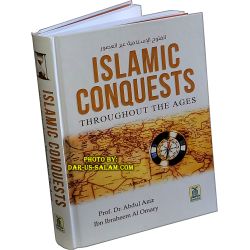
History is a mirror of the past days and nights of nations. The history of Islam is a mirror of fourteen centuries of this Ummah — and, its compilers argue, of the finest human civilization the earth has carried.
From which follows a necessity: acquainting a new generation with the great intellectual and political leaders, the renowned figures, and the men of achievement and courage who defeated false forces in the field so that the true religion could reach lands where darkness and ignorance had prevailed.
What the Atlas Covers
The major Islamic conquests in sequence — the events of consecutive days, months and years — beginning in the period of the first Caliph Abu Bakr As-Siddiq رضي الله عنه and running to the reign of the Ottoman Caliph Murad III.
Geographically it reaches from Central Asia to Morocco, and into Spain and Central Europe.
Why an Atlas Rather Than a History
Because conquest is geography before it is anything else. A narrative can tell you an army marched on Ctesiphon; a map shows you how far that was, what lay between, and why the route mattered.
The full-color maps and photographs are what the book is for. They are arranged so the reader travels alongside the events rather than reading about them from outside, and details that a text account passes over become visible as soon as they are drawn.
Who It Is For
Families — the compilers explicitly urge readers to study it themselves and then get their children, relatives and friends to do the same, which is how a book like this earns its cost. Islamic schools and libraries. Students and teachers of Islamic history. Anyone who has read about the conquests and never had a clear picture of where anything was.
Related Reading