Allah created mankind for one purpose — to worship Him alone, without partners. Everything else in the religion follows from that sentence, and Shaykh Salih Al-Fawzan begins here before moving to anything else.
The book is concise, but it is a scholar's treatment: built entirely on the Qur'an, the authentic Sunnah and the understanding of the Salaf, with the classical scholars quoted where their explanation settles a point.
Belief That Reaches the Ground
The Shaykh's central argument is that Tawheed is not a doctrine to be assented to and shelved. It determines how a person prays, whom he asks when he needs something, what he relies on, what he fears, what he hopes for, whom he loves, and whom he obeys when obedience is costly. Every one of those is an act of worship, and each is either directed to Allah alone or divided.
Read that way, the categories of Tawheed stop being abstractions. They become a set of questions a person can put to himself about last week.
Shirk Examined
Since Tawheed is defined partly by what contradicts it, the book gives full attention to shirk — its forms, the practices that carry it, and the innovations, superstitions and customs that weaken belief without ever being recognized as doing so. Nothing here rests on the author's opinion; each point is carried by a verse, an authentic hadith or the words of a recognized scholar, which is what lets a reader distinguish the religion from what has attached itself to it.
Honoring the Prophet Without Excess
One section deserves particular note. The Shaykh affirms the obligation to love, honor and obey the Messenger of Allah ﷺ — and explains, in the same breath, that supplication, sacrifice, vows, reliance and seeking aid belong to Allah alone. Holding both together is what protects a Muslim from the two opposite errors: neglecting the Prophet's ﷺ right, and raising him past the station Allah gave him.
Who It Is For
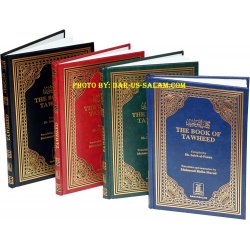
New Muslims wanting a reliable first book on creed. Students of knowledge revisiting the foundations. Islamic schools, masjid libraries and family study circles. Mahmoud Ridha Murad's translation keeps the precision of the Arabic while staying readable, and at 159 pages in hardback it is short enough to finish and durable enough to keep returning to.
Related Reading



 (3)
(3)