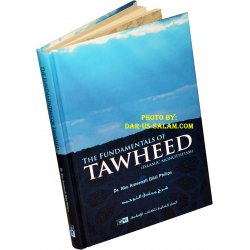
The Fundamentals of Tawheed (Islamic Monotheism) by Dr. Abu Ameenah Bilal Philips was the first book written directly in English — not translated from Arabic — on Tawheed according to the classical understanding, and it remains one of the standard first references on the subject for English-speaking readers.
Why Tawheed Comes First
Tawheed, belief in the Oneness of Allah, is the foundation every other act of worship rests on: without it, Philips argues, worship and good deeds are rendered void regardless of how sincerely they are performed. Humans, as Allah’s vicegerents on earth, are commanded to put that belief into practice in every part of life — which makes recognizing what actually violates Tawheed a practical necessity, not an abstract theological point.
What the Book Covers
Philips identifies and explains, with examples drawn from cultures and belief systems across history, the specific ways the oneness of Allah is compromised — equipping the reader to recognize those patterns in his own thought and practice and correct them. The book’s reception has held up this claim directly: reviewers have called it the clearest available demonstration, for an English-speaking reader, of what distinguishes Islam as purely and consistently monotheistic against the mixed record of other traditions.
Who This Book Is For
Any Muslim who wants a clear, foundational statement of what Tawheed requires, and a natural starting point before Philips’s more advanced works on tafseer and hadith.
Also by Dr. Bilal Philips
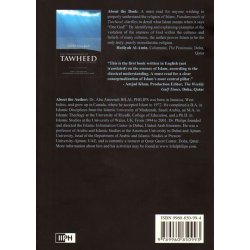
About the Author
Dr. Abu Ameenah Bilal Philips was born in Jamaica and grew up in Canada, where he accepted Islam in 1972. He holds a B.A. in Usool ad-Deen from the Islamic University of Madinah (1979), an M.A. in Islamic Theology from the University of Riyadh (1985), and a Ph.D. in Islamic Theology from the University of Wales (1994). He founded and directed the Islamic Information Center in Dubai, established the Islamic Online University in 2001, and has taught Arabic and Islamic Studies at universities across the UAE and Qatar.



 (3)
(3)