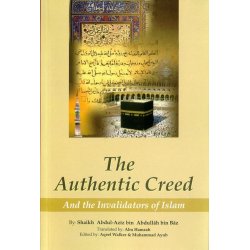
Two subjects, in one short treatise, and they belong together. What must a Muslim believe — and what would take him outside Islam entirely? Most Muslims have been taught the first, in outline. Very few have been taught the second at all.
Part One — The Six Pillars of Iman
Belief in Allah, His Angels, His Books, His Messengers, the Last Day, and Al-Qadr, divine decree in its good and its hardship. Each is presented with its evidence from the Qur'an and authentic Sunnah, so the reader learns not only what Muslims believe but why these six form the core rather than some other list.
Shaykh Ibn Baz keeps returning to the link between belief and action. Sound creed is the foundation on which every accepted deed rests — without it, acts of worship lose their purpose and may not be accepted at all. True faith produces sincerity, obedience and steadfastness on its own; where those are absent, the belief underneath is usually where to look.
Part Two — The Invalidators of Islam
The second section covers the Nawaqid al-Islam: the statements, actions and beliefs that nullify a person's Islam. It is treated with the precision the subject demands, because a matter this serious cannot be left to impression — and because the ruling on an act is not the same as a ruling on a particular person, a distinction the Shaykh observes carefully.
The purpose is protective rather than alarming. The reader is not being invited to inspect others. He is being given the knowledge to guard his own faith from shirk, from disbelief, and from practices that contradict the Qur'an and Sunnah while presenting themselves as devotion.
Who It Is For
New Muslims, students of knowledge, Islamic schools, da'wah organizations and study circles. Its brevity, plain language and authentic proofs are why it appears on so many recommended reading lists as a first book on Aqeedah — short enough to be finished, serious enough to be worth finishing.
Related Reading



 (1)
(1)