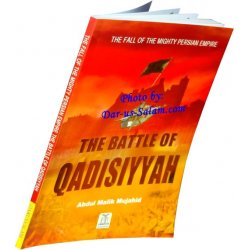
Two empires dominated the world in the seventh century. Within a generation of the Prophet's ﷺ death, one of them had been broken by an army from a peninsula that had never been unified. Qadisiyyah is where it happened.
What the Battle Decided
The victory heralded the downfall of the Sasanian dynasty, paved the way for the conquest of Iraq, and quickened Islamic expansion into Persia and beyond. At Qadisiyyah the Muslims broke Persian military power and dealt it a blow from which it never recovered — which is why the battle is counted among the most decisive in the history of humanity.
The Numbers
The classical sources record the Persian force at around 240,000 and the Muslim force at about 30,000 — eight to one against, on ground of the enemy's choosing, with war elephants the Arabs had never faced before.
Figures from pre-modern sources are treated cautiously by historians, and the exact totals are debated. What is not debated is the disparity, or the outcome: a smaller force drove one of the superpowers of the day into the ground.
Why It Is Worth a Book of Its Own
Most treatments give Qadisiyyah a paragraph inside a general history, which loses everything interesting about it — the four days of fighting, the arrival of reinforcements at the critical moment, the tactics used against the elephants, the commander directing from a building because he was too ill to sit a horse, and the diplomacy that preceded the fighting.
A short book on a single battle can afford the detail that makes a battle comprehensible rather than merely reported.
Who It Is For
Readers of military and Islamic history. Teenagers and young men, for whom this is a genuinely gripping episode. Islamic schools and study circles. Anyone who has read that Persia fell and would like to know how.
Related Reading



 (1)
(1)