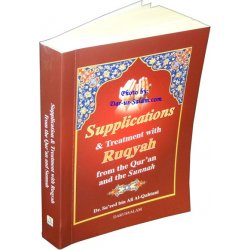
Two subjects in one small book, and they belong together: how to ask Allah, and what to recite when something is wrong.
Supplication
The booklet starts with the importance of du'a and the etiquette that governs it — how to begin, what to praise Allah with, how to send salah upon the Prophet ﷺ, and the conditions attached to a supplication being answered.
It also covers the times and circumstances in which supplication should be made: the last third of the night, between the adhan and iqamah, in sujood, while fasting, in the rain, when traveling, and the hour on Friday. Most Muslims supplicate at moments of crisis and are unaware that the texts identify particular windows in which asking is more likely to be answered.
Ruqyah
The second half is the practical one. It presents the verses of the Qur'an and the Prophetic supplications used in ruqyah, and shows how a Muslim performs it on himself — against illness, sorcery, the evil eye and other ailments.
That emphasis matters. Ruqyah has become, in many places, a service purchased from a practitioner, sometimes at considerable cost and sometimes with practices that have no basis at all. The Prophet ﷺ taught it as something a person does for himself and his family, using established texts, requiring no intermediary.
Knowing what is legislated is the best protection against what is not.
Why Pocket Size
Because the moment you need this is the moment you are ill, frightened or unable to sleep. A book on a shelf in another room is not much use then. This one lives in a bag, a bedside drawer or a glovebox.
Related Reading



 (9)
(9)