The Muwatta of Imam Malik is one of the earliest and most influential compilations of Islamic jurisprudence, serving as a foundational text within the Maliki school of thought.
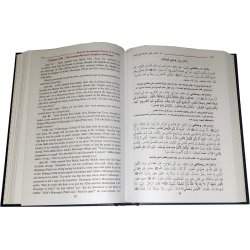
Composed by Imam Malik ibn Anas, a revered scholar and jurist of early Islamic history, this two-volume work is highly valued for its authentic Hadith narrations and rich legal insights. It covers various aspects of Islamic law and social conduct.
Why It Came First
The Muwatta predates the six canonical hadith collections. Imam Malik compiled it in Madinah, and its distinctive feature is that it records not only narrations but the practice of the people of Madinah — the living tradition of the city where the Prophet ﷺ had lived and taught, two generations before.
For Imam Malik, that continuous practice was itself evidence. If the descendants of the Companions in Madinah were all doing something a particular way, that carried weight alongside an isolated narration.
Why It Still Matters
Because it shows Islamic law at the point where it was still being derived rather than inherited. A reader sees the reasoning, the disagreement, and the process by which a ruling was settled — which is largely invisible in later texts that report conclusions.
It is also short enough to read through, unlike the collections that followed it.
Who It Is For
Students of fiqh and hadith, and anyone interested in how Islamic jurisprudence took shape. The Arabic-English format suits students working with the original alongside the translation.
Related Reading



 (5)
(5)