Allah placed kindness to parents beside the command to worship Him alone, in the same verse. Few duties are given that position, and few are so widely neglected by people who would not consider themselves neglectful.
How Far the Command Reaches
The Qur'an sets the standard at a level most readers have never registered: a person is not permitted to say "uff" — the smallest sound of irritation — to his parents. Abdul Malik Al-Qasim draws out how far that reaches. If the least expression of annoyance is forbidden, then impatience with an aging parent's repetition, or with the difficulties of caring for a body that is failing, falls under it too.
The Accounts
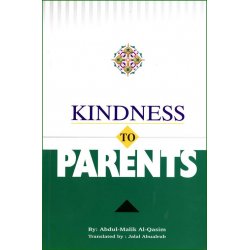
The booklet's substance is a collection of narrations showing how the righteous predecessors served their parents — birr al-walidayn practiced at a level that will surprise most readers. They attended to their parents' needs as an act of worship performed sincerely for Allah, not as a family obligation discharged out of duty.
That distinction runs through the book. The same act done for the same person is a different thing depending on why it is done, and the Salaf did it for the One who commanded it.
Where We Fall Short
The author does not stop at inspiration. He is direct about the shortcomings common among Muslims today — the phone calls not made, the visits deferred, the rights allowed to lapse while a person is busy with things he considers more urgent. It makes for uncomfortable reading, which is the intention.
Who It Is For
Anyone with living parents, particularly anyone living at a distance from them. Adults caring for parents in old age. Young people who have not yet grasped what is owed. Parents themselves, teaching their children. And for readers whose parents have died, it covers what can still be done for them.
Related Reading




 (3)
(3)