After Hajj, Umrah is the journey a Muslim most wants to make — for the reward, and for the chance to stand at the Ka'bah and pray in the Prophet's Mosque, and to visit the other sacred places and try to sense the atmosphere of the time when Allah's Messenger ﷺ walked there and bore what he bore in delivering Islam.
And a newcomer runs into difficulty almost immediately, because he does not know the rites well enough or the places at all.
What the Guide Covers
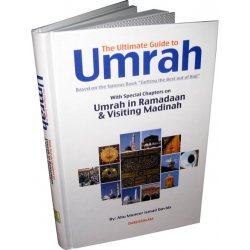
This book was compiled with care and research to give a pilgrim complete details on everything he wants to know: the rites of Umrah in order, from ihram and the mawaqit through the talbiyah, tawaf, sa'i and the shortening or shaving; the supplications for each stage; and the practical realities of the places themselves.
It draws on the material in Getting the Best out of Hajj, which means it carries the same practical, tested quality — written by someone describing what actually happens rather than what should happen in principle.
Two Chapters You Will Not Find Elsewhere
Umrah in Ramadan. The Prophet ﷺ said an Umrah in Ramadan equals a Hajj in reward, which is why the Haram in Ramadan is unlike the Haram at any other time. That changes the planning entirely — the crowds, the timings, doing it while fasting, and fitting it around Taraweeh and the last ten nights. This chapter treats it as its own undertaking.
Visiting Madinah. Almost every pilgrim goes on to Madinah, and almost no Umrah guide covers it properly. What is legislated in the visit, the correct manner of giving salam at the grave of the Prophet ﷺ and his two Companions, what to see, and the practices that have attached themselves to the visit without basis.
Related Reading



 (2)
(2)