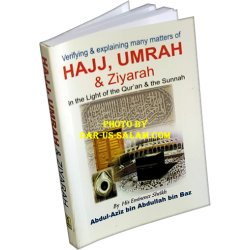
Most pilgrims learn Hajj twice: once from a book beforehand, and again in the crowd when something happens that the book did not mention. This guide — Verifying and Explaining Many Matters of Hajj, Umrah and Ziyarah — is written to reduce the second kind of learning. It works through the journey from preparation to return, and where a matter is disputed or commonly misunderstood, it says so and gives the evidence.
Before You Travel
Who is obliged to perform Hajj and on what conditions; the intention and the sincerity it requires; settling debts and returning rights before departure; what to prepare; and the rulings of ihram — where the mawaqit are, what is prohibited once in ihram, and what to do if a prohibition is breached.
During the Rites
The rites in order: tawaf and sa'i, the days of Mina, standing at Arafah, Muzdalifah, the stoning of the Jamarat, the sacrifice, shaving or shortening, and the farewell tawaf. Each is given with what is obligatory (rukn and wajib) separated from what is recommended — the distinction that decides whether a mistake needs compensating or not. Umrah is covered in the same way, whether performed on its own or as part of Hajj.
Ziyarah
The visit to the Prophet's Masjid in Madinah is covered on its own terms: what is legislated in visiting, the correct manner of giving salam at the grave of the Prophet ﷺ and his two Companions, and the practices that have attached themselves to the visit without basis. Every ruling is traced to the Qur'an and the authentic Sunnah.
Who It Is For
First-time pilgrims and those returning after many years. Group leaders and mahrams responsible for others. Anyone advising family members preparing to travel. Read it before you go, and take it with you — it is more useful in Mina than on a shelf at home.
Related Reading



 (5)
(5)