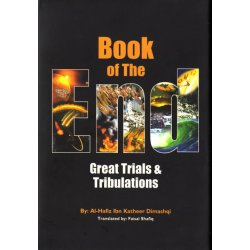
Everything ends, including this universe, and believing in the Last Day is part of faith. The Prophet ﷺ foretold the signs of that Day, and Ibn Kathir collected those prophecies in his great history Al-Bidayah wan-Nihayah. This volume is the portion dealing with what has not yet happened.
Where It Sits
Ibn Kathir's own account explains the arrangement. He had already covered the unseen past in detail — the beginning of the world, the stories of the prophets, the history of peoples down to his own era — then the Prophet's ﷺ biography with his characteristics and the proofs of his prophethood, and then the events he foretold that had already come to pass.
This book takes up what remains: the signs of the Hour and the great events that are still to take place. We are required to believe in all of it, because the Prophet ﷺ spoke not from desire but from revelation.
What It Covers
The greater signs and the trials preceding them — the tribulations, the false claimants, the appearance of the Dajjal, the descent of 'Isa عليه السلام, Ya'juj and Ma'juj, and the events leading to the Hour itself. Then the Day of Judgment, the reckoning, and what follows.
"This nation of mine is one upon which there is mercy; there is no punishment upon it in the Hereafter. Its punishment is in this world — with trials, earthquakes and killings." — narrated by Abu Musa Al-Ash'ari
Why Ibn Kathir Rather Than Anyone Else
Eschatology attracts fabrication more than any other subject in Islam, because a claim about the future cannot be checked. Ibn Kathir was a historian and a scholar of hadith, and his collection is trusted precisely because he applied the standards of the second discipline to the material of the first.
Related Reading




 (11)
(11)