Belief in Paradise is not a comforting appendix to a Muslim's creed. It is what makes him eligible for the bliss and happiness of the Hereafter, and it is what determines how he treats the years he has here.
The argument the book opens with is worth sitting with. This is not a belief confined to the life of a finite and passing world. It is a great creed that links the life of a man in this world to his life in the next — so that his vision is not restricted to what is in front of him but extends to what is coming.
Why That Link Changes Things
A person who genuinely holds this makes different decisions. Not because he despises this life, but because he has stopped mistaking it for the whole picture. Losses look different. So do gains. So does the calculation behind giving something away, or holding a grievance, or spending an evening.
Most Muslims affirm the belief and live as though the horizon ended at the edge of this world anyway. The gap between the two is what a book like this is written to close — and the way it closes it is not by argument but by description.
What Is Gathered
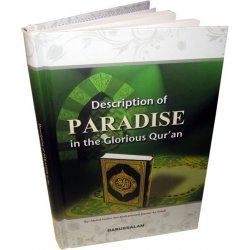
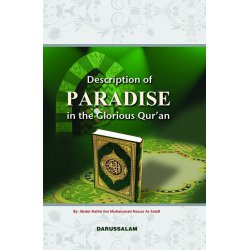
The Qur'an's own account of Paradise: what it contains, what its people receive, how they live there, and what is said to them. The verses are drawn together and explained, so that a reader who has met them scattered across the Mushaf sees them as a single sustained description.
The effect is different from reading them one at a time. A picture forms, and a picture is what motivates a person where a doctrine does not.
Who It Is For
Anyone whose belief in the Hereafter has become theoretical. Readers going through loss or bereavement. Study circles and khutbah preparation. And anyone who has found that fear of the Fire moves him less than it used to, and would like to try hope instead.
Related Reading



 (2)
(2)