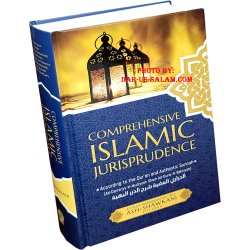
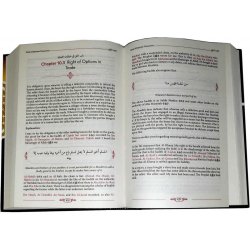
Comprehensive Islamic Jurisprudence is the authoritative English translation of Imam Ash-Shawkani's classic Arabic work Ad-Durar al-Bahiyyah fee al-Masaail al-Fiqhiyyah (الدرر البهية في المسائل الفقهية) — a seminal treatise in Fiqh presenting the most sound, text-based rulings across the major schools, based firmly on Qur'an, Sunnah and scholarly consensus.
Spanning 798 pages in a sturdy hardcover format, it is designed to serve both serious students of knowledge and everyday Muslims seeking a clear, reliable guide to Islamic law.
Evidence Before School Affiliation
Ash-Shawkani does not follow the rulings of a single madhhab; rather, he engages in honest ijtihad, weighing evidence from the Qur'an and Sunnah and preferring the strongest, most textually supported positions. That approach makes the book particularly valuable for those seeking rulings based on sound evidence rather than customary practice.
What Shaykh Siddiq Hasan Khan Said of It
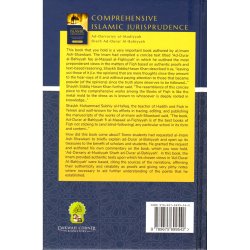
He described Ad-Durar al-Bahiyyah as "leaving out the opinions that are mere thoughts, since they amount to the hearsay of it, and without paying attention to those that became popular — since the truth alone deserves to be followed."
He continued: "the resemblance of this concise piece to the comprehensive works among the Books of Fiqh is like the metal mold to the dross, as is known to whosoever is deeply rooted in knowledge."
What Is Covered
Purification (taharah), prayer (salah), fasting, zakah, pilgrimage (hajj), financial transactions, marriage and family law, the jurisprudence of social dealings, and various aspects of worship and daily life — each with concise but thorough explanation and referenced evidence.
About This Translation
The English translation is based on the Arabic edition published by Dar Ibn Hazm (Beirut), reviewed by Shaykh Muhammad Subhi bin Hasan Hallaq, the renowned Yemen-based scholar of hadith and fiqh well known for tracing, editing and publishing the manuscripts of Imam Ash-Shawkani's works. He states:
"The book, Ad-Durar al-Bahiyyah fee al-Masaail al-Fiqhiyyah, is among the best books of Fiqh, not sticking to (and blind following) any particular Madhhab in its form and content..."
About the Author
Muhammad bin Ali Ash-Shawkani was from the Zaydi school of law originally, and called for a return to the textual sources of the Qur'an and hadith. He viewed himself as a mujtahid. Of his work issuing fatwas he said: "I acquired knowledge without a price, and I wanted to give it thus." His major fatwas were collected and preserved as a book; his shorter ones, he said, "could never be counted."
He is credited with developing a series of syllabi for attaining various ranks of scholarship, and insisted that a jurist who wanted to be a mujtahid fi'l-madhhab was required to actually perform ijtihad — which stemmed from his opposition to taqlid for one qualified to exercise independent reasoning.
Despite his background, he is regarded by many as a revivalist and has influenced contemporary movements including the Ahl-i Hadith and the Salafi movement. His legal decisions are frequently used in contemporary scholarly debate. Allama Ash-Shawkani died in the year 1255 AH.
Related Reading