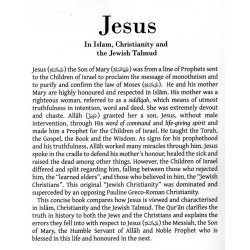
Jesus ('Isa — peace be upon him), the son of Mary (peace be upon her), was from a line of prophets sent to the children of Israel to proclaim the message of monotheism and to purify and confirm the Law of Moses (peace be upon him). He and his mother Mary are highly honored and respected in Islam. His mother was a righteous woman, referred to as a siddiqah, meaning of utmost truthfulness in intention, word and deed.
Why Compare Three Traditions
Because Jesus عليه السلام occupies three very different positions in these three bodies of literature — venerated Messiah and final revelation in Christianity, honored prophet and Messiah-to-return in Islam, and treated with hostility in some Talmudic material that most people, including most Christians, have never read.
Setting the three side by side is instructive precisely because it is uncomfortable. It shows that Islam's position — honoring Jesus as a great prophet without deifying him — sits at neither extreme, and that the assumption Muslims are hostile to Jesus is the opposite of what the sources actually establish.
What the Book Covers
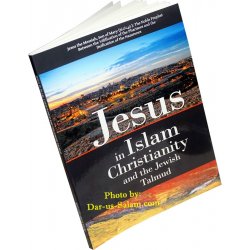
The Islamic account of Jesus' birth, mission, miracles and eventual return; the Christian doctrine of his divinity and crucifixion; and what the Talmudic material actually says, examined rather than assumed.
Who It Is For
Anyone doing da'wah to Christians or Jews, and readers interested in how the same figure is understood across three related religious traditions.
Related Reading



 (2)
(2)