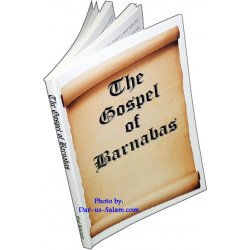
The Gospel of Barnabas, translated by Lonsdale and Laura Ragg, is a controversial text that claims to present an alternative account of the life and teachings of Jesus Christ.
What It Contains
It is attributed to Barnabas, an early Christian disciple mentioned in the New Testament, and its narrative differs from the canonical Gospels at several significant points — including its treatment of the crucifixion and its account of what Jesus عليه السلام said about the prophet to come after him.
Those points are why the text attracted Muslim interest, and why it has been argued over ever since.
A Word on Its Authenticity
This should be said plainly, because the book itself does not.
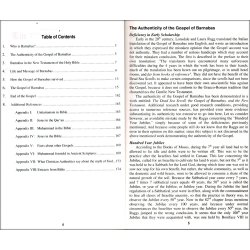
The authenticity and historical origin of this text are disputed. The earliest manuscripts date from the sixteenth century, and a number of Muslim scholars — not only Christian ones — have concluded that it is a late composition rather than an early Christian document. It also contains details inconsistent with the Qur'an.
It is therefore not a source of Islamic belief, and using it as evidence in da'wah is unwise: an informed Christian will raise the dating question immediately, and the conversation will be lost on a point that was never necessary to make.
Who It Is For
Readers interested in the text as a historical curiosity and in the debate surrounding it. It is offered here for study, not as scripture.
Related Reading



 (3)
(3)