Abu Bakr رضي الله عنه was Caliph for roughly two years. In that time he held together a community that came very close to disintegrating, and the shape of everything afterwards was decided by decisions he made in those months.
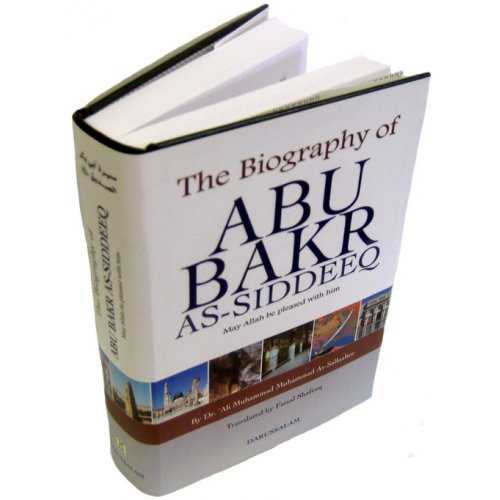
This is the full account of it — 784 pages by Dr. Ali Muhammad As-Sallabi, translated by Faisal Shafeeq, working from the Qur'an, authentic Sunnah and the reliable early historians.
Before the Caliphate
His noble character before Islam, and his immediate acceptance of the Prophet's ﷺ message — without argument or delay, which is where the title As-Siddeeq, the one who confirms the truth, comes from. His support of the oppressed, buying the freedom of tortured slaves. His spending in the path of Allah until he had nothing left. His companionship in the cave during the Hijrah, and his loyalty through the Makkan and Madinan periods.
The Two Years That Decided Everything
When the Prophet ﷺ died, the community faced simultaneous crises. Dr. As-Sallabi examines each in depth: the election itself and how it was settled; the decision to send Usamah's army out as planned when everyone advised holding it back; the refusal of tribes to pay Zakat and the apostasy that followed; and the Ridda wars that answered it.
And the compilation of the Noble Qur'an into a single written collection — undertaken when the memorisers began dying in battle, and arguably the single most consequential administrative decision in Islamic history.
Its Approach
As-Sallabi's particular strength is analysis. He does not only narrate: he asks why the conquests succeeded, how the leaders were chosen, what the letters between commanders reveal, and what methodology of governance produced a stable state that reached from Madinah across the Peninsula and beyond.
Related Reading



 (9)
(9)