Every Muslim alive reads from a Qur'an whose written form was settled under 'Uthman ibn 'Affan رضي الله عنه. That single service would justify a biography. There is a great deal more.
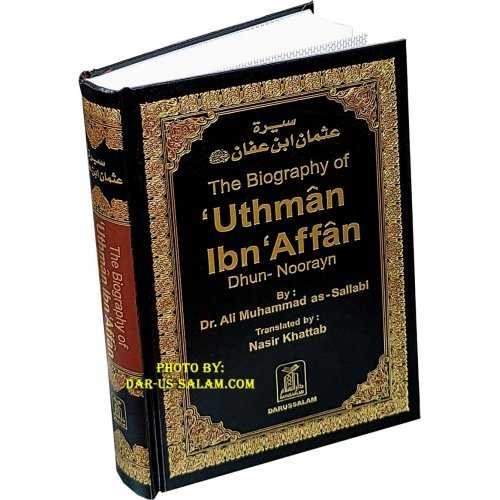
This is Dr. Ali Muhammad As-Sallabi's account, translated by Nasir Khattab, working from the Qur'an, the Sunnah and the narrations of the early scholars.
The Man
He accepted Islam early, and from that moment his wealth belonged to the religion. He migrated for the sake of Allah. He funded the expansion of Masjid an-Nabawi. He bought the Well of Rumah — Madinah's only source of sweet water, then privately owned and charged for — and gave it to the Muslims outright.
He was also known for a modesty so marked that the Prophet ﷺ noted it, and he was among the ten given the glad tidings of Paradise. He married two of the Prophet's ﷺ daughters in turn, which is where his title comes from.
The Caliphate
The book covers the flourishing of the Islamic state under him: administrative reform, the development of the judiciary, military expansion, and the spread of Islam across territories that had not previously heard it.
And the Uthmanic Mushaf — the standardization of the Qur'an into a single authoritative written form, undertaken as the community spread across languages and dialects. It is the reason the text is identical everywhere on earth today.
The Final Years
The last part of his caliphate is among the most misrepresented periods in Islamic history, and it attracts a large body of unreliable narration. Dr. As-Sallabi examines the accusations made against him, tests them against authentic sources, and addresses the trials and the siege that ended in his martyrdom while he was reciting the Qur'an.
That examination is much of the reason to read this particular biography rather than a shorter one.
Related Reading



 (5)
(5)