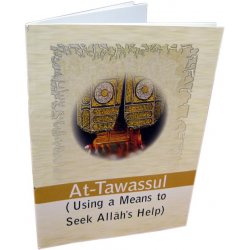
Tawassul is one of the most argued-about subjects in Islamic creed, and one of the most easily settled once the categories are separated. The difficulty is that the word covers several very different things, and people defending one are often accused of defending another.
The Three Legislated Forms
The Qur'an and the Sunnah establish three ways of seeking nearness to Allah, and all three are agreed upon:
- By Allah's Beautiful Names and Attributes — asking Him by His mercy, His generosity, His forgiveness
- By one's own righteous deeds — as in the hadith of the three men trapped in the cave, each of whom asked Allah by a sincere act he had done
- By requesting the supplication of a righteous living person — asking someone to pray for you, as the Companions asked the Prophet ﷺ
Each is presented with its authentic evidence and practical examples. A reader who has these three clearly in mind can evaluate almost any disputed case himself.
What Falls Outside
The booklet then addresses the practices that developed later without basis in the Prophet's ﷺ teaching, and answers the arguments advanced for them with evidence rather than assertion.
The governing principle stays visible throughout: every act of worship — supplication, reliance, hope, and the seeking of ultimate help — belongs to Allah alone. The point of the discussion is not to restrict how a Muslim may approach his Lord, but to make sure that in approaching Him he does not divide what belongs to Him.
Balance Rather Than Argument
This is a subject where a good deal of heat has been generated and rather less clarity. The book keeps to what is authentically transmitted, returns to the understanding of the Prophet ﷺ, his Companions and the early generations, and asks the reader to weigh the evidence rather than inherited custom or emotional attachment.
At 40 pages it is short enough to be read carefully, which matters more here than length.
Related Reading