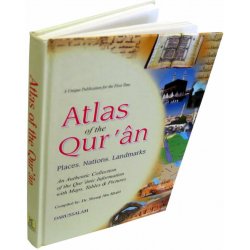
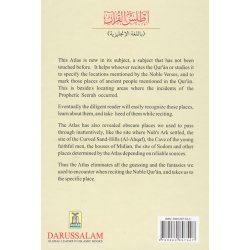
This Atlas is new in its subject — a subject that had not been treated in this way before.
It helps whoever recites the Quran or studies it to specify the locations mentioned by the noble verses, and to mark the places of the ancient peoples mentioned in the Quran. It also locates the areas where the incidents of the prophetic Seerah occurred. Eventually the diligent reader will easily recognize those places and learn about them.
Why Geography Changes How the Quran Reads
Because the Quran assumes a landscape its first audience knew. When it refers to the people of 'Aad, to Iram of the pillars, to the town the caravan passed, or to the two seas that do not mix, the original listeners could place every one.
A modern reader cannot, and the accounts become abstract as a result — stories about somewhere rather than about a place with a location, a climate and neighbors.
Drawn on a map, the same passages become concrete. The distances turn out to be real distances, and the peoples turn out to have been where they were for reasons.
What Is in It
Maps, tables and pictures throughout: the locations named in the verses, the sites of the destroyed nations, and the geography of the Prophet's ﷺ life.
Who It Is For
Anyone who studies or teaches the Quran. It works particularly well in a classroom, where a map does in one page what takes twenty minutes to explain.
Related Reading



 (3)
(3)