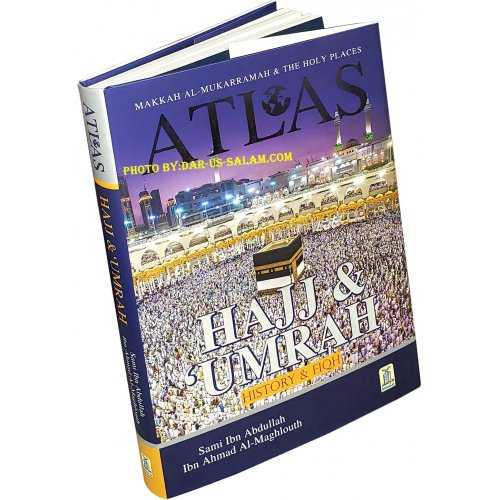
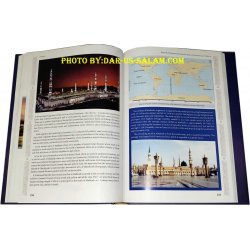
Hajj is an act of worship performed across a specific landscape, in a specific order, in places that carry four thousand years of history. A pilgrim who arrives knowing the rites but not the ground has half the picture — and a book of prose cannot supply the other half.
Both History and Fiqh
The pairing in the subtitle is the point. Most Hajj books do one or the other: a manual of rulings, or an account of the sacred history. This one runs them together, so a reader learns what to do at a place and what happened there.
It covers the history of Makkah Al-Mukarramah and all the holy places of Islam connected with Hajj and Umrah — the Ka'bah and its rebuilding through the centuries, Safa and Marwah, Mina, Muzdalifah, 'Arafah, and the sites around them.
Why the Format Does the Work
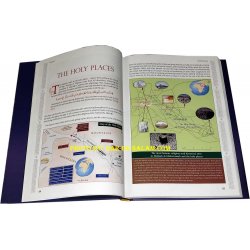
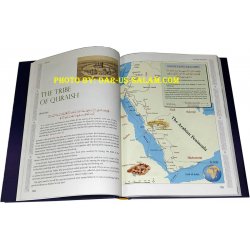
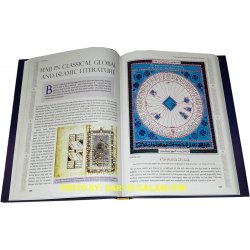
Maps, drawings, diagrams and beautiful photographs, printed in full color at 9 x 13 inches. That size is not indulgence: a diagram of the Haram, or of the route between Mina and the Jamarat, is only useful if it is large enough to read.
A pilgrim who has seen the layout before he arrives moves through it differently, and a person who will never be able to go can at least see where everything is.
Who It Is For
Anyone preparing for Hajj or Umrah — read before departure rather than taken along, since at this size it is a reference for home. Hajj group leaders and teachers running pre-departure classes, where a large-format atlas is worth an hour of explanation. Families and school libraries. Anyone who has performed the pilgrimage and would like to understand what he was standing on.
Related Reading