Russian is the first language of tens of millions of Muslims — across the Russian Federation itself, and throughout Central Asia and the Caucasus, where it remains the shared language across a dozen nationalities.
Why That Makes This Edition Unusually Useful
A Tatar, a Chechen, a Kazakh and an Uzbek may each speak a different first language, and all of them read Russian. A single Russian edition reaches communities that would otherwise need four separate translations — which is why Russian Qurans circulate far beyond Russia.
The Layout
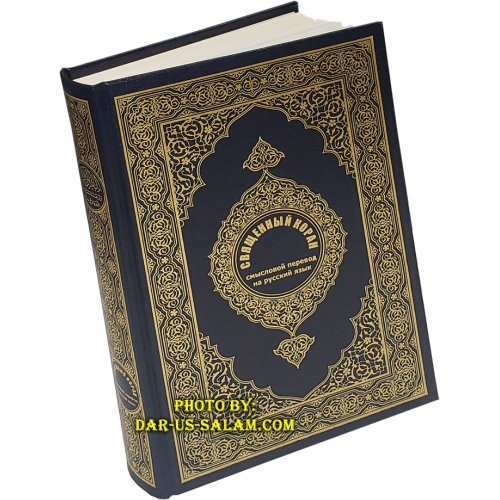
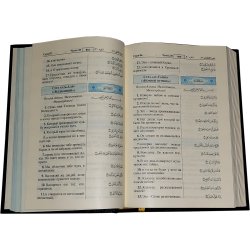
The Russian translation with the corresponding Arabic verse in Uthmani script set beside it, verse by verse. Uthmani is the standard script used at the Haramain, so the Arabic side reads exactly as a familiar mushaf does.
That side-by-side arrangement lets a reader recite from the original and understand from the translation without losing his place between the two.
Who It Is For
Russian-speaking Muslims and anyone studying Islam in Russian. Also worth knowing about for masajid in North America and Europe serving Central Asian and Caucasian congregations, where Russian is frequently the common language.
Related Reading
Описание на русском
Данный мусхаф содержит русский перевод Корана и соответствующий арабский аят в письме усмани рядом с ним.
Русский язык является родным для десятков миллионов мусульман — как в самой Российской Федерации, так и по всей Центральной Азии и Кавказу, где он остаётся общим языком для десятка национальностей.
Именно это делает данное издание особенно полезным. Татарин, чеченец, казах и узбек могут говорить на разных родных языках, но все они читают по-русски. Одно русское издание охватывает общины, которым иначе понадобилось бы четыре отдельных перевода — поэтому русские Кораны расходятся далеко за пределы России.
Расположение текстов рядом друг с другом позволяет читателю произносить аяты на языке оригинала и понимать их смысл, не теряя места между двумя колонками.


 (2)
(2)