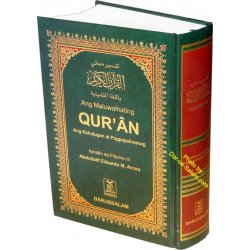
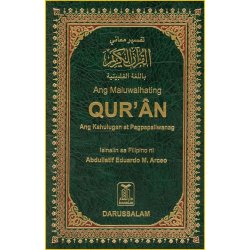
The Philippines has a Muslim population of several million, concentrated in Mindanao and the Sulu archipelago, with a history reaching back to the fourteenth century — and comparatively little Islamic literature available in the national language.
This edition places the Arabic alongside the Filipino with explanatory tafsir in the footnotes, so a reader recites from the original and understands from the translation.
It is also among the more useful things to give a Filipino Muslim family abroad, where the children may read English better than Arabic and the parents may prefer Filipino to either.
About These Translations
A translation carries the meaning of the Quran rather than the Quran itself, which remains the Arabic. That is why these editions place the Arabic text alongside the translation rather than replacing it — a reader recites from the original and understands from the facing page.
For anyone whose first language is not English or Arabic, reading the Quran's meaning in the language they actually think in makes a considerable difference. It is also among the most effective things a family can give an elderly relative or a new Muslim from that language background.
Paglalarawan sa Filipino
Ang Marangal na Qur'an na may salin sa wikang Filipino, katabi ang tekstong Arabe at may tafsir sa ibaba ng pahina.
Ang Filipino ang pambansang wika ng Pilipinas. May ilang milyong Muslim sa bansa, lalo na sa Mindanao at sa kapuluan ng Sulu, na may kasaysayang umaabot pa noong ikalabing-apat na siglo — ngunit kakaunti pa rin ang aklat-Islam na nasa pambansang wika.
Malaking tulong din ito sa mga pamilyang Pilipino sa ibang bansa, kung saan madalas na mas sanay sa Ingles ang mga anak samantalang mas nauunawaan ng mga magulang ang Filipino.