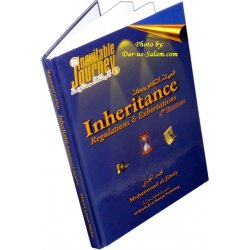
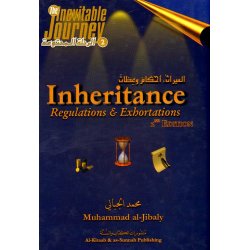
Inheritance: Regulations & Exhortations by Muhammad al-Jibaly is Part 2 of The Inevitable Journey, al-Jibaly’s series on sickness, death and what follows it. This volume covers the two things every Muslim is obligated to settle before death: the Islamic will (waṣiyyah) and the distribution of an estate among its rightful heirs.
Why a Muslim Needs an Islamic Will
Civil inheritance law, in most countries Muslims live in today, does not distribute an estate the way the Qur’an commands. Without a valid Islamic will in place, that gap is filled by default civil rules — not by the shares Allah fixed for each heir. Al-Jibaly treats writing a will as what it actually is: an act of worship that protects a family from disputes and ensures the deceased’s wealth reaches the people Allah gave it to.
What the Book Explains
The first half covers the waṣiyyah itself — who may receive a bequest, its legal limits, witnesses, debts, trusts and guardianship. The second half sets out the principles of Islamic inheritance ('Ilm al-Mawārīth): the categories of heirs, fixed shares (furūḍ), residuary heirs (’aṣabah), and the exclusion rules (ḥajb) that determine who inherits and how much. Throughout, al-Jibaly pairs the legal detail with reminders about accountability before Allah and the point of preparing for death at all.
Who This Book Is For
Every Muslim household needs a will, which makes this a practical reference rather than a specialist one — useful for anyone drafting their own, and essential reading for imams and community leaders who are asked to help others draft theirs.
The Inevitable Journey Series
Inheritance is Part 2 of a four-part series following a Muslim’s journey through sickness, death and the grave. Three of the four parts are available here: