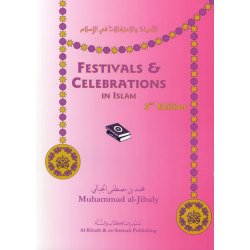
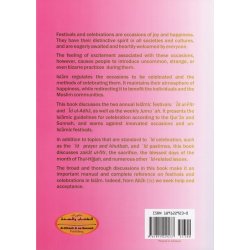
Festivals & Celebrations in Islam sets out what Islam actually permits, and what it does not, when it comes to marking an occasion with joy. Every culture celebrates, and celebration tends to invite excess — which is exactly why Islam regulates both which occasions are celebrated and how, rather than leaving the matter to custom.
The Three Occasions Islam Recognizes
The book covers the two annual festivals, ’Eid al-Fitr and ’Eid al-Adha, together with the weekly congregation of Jumu’ah — the only recurring celebrations with a basis in the Qur’an and Sunnah. Beyond the ’Eid prayer and khutbah, it works through zakat al-fitr, the ’Eid sacrifice, the virtue of the first ten days of Dhul-Hijjah, and the etiquette proper to each occasion.
What It Warns Against
Because the Prophet ﷺ named the two ’Eids and nothing else, the book is equally direct about occasions that have no basis in revelation — innovated celebrations and borrowed festivals that have found their way into some Muslim communities without any textual support. Establishing this boundary, rather than simply describing the ’Eids, is the book’s real purpose.
Who This Book Is For
Any Muslim who wants a clear, sourced answer to what may and may not be celebrated in Islam — useful ahead of ’Eid season for khutbahs, and for parents navigating which occasions to mark with their children.