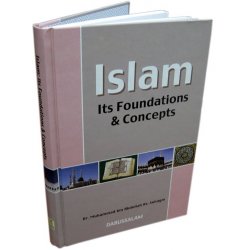
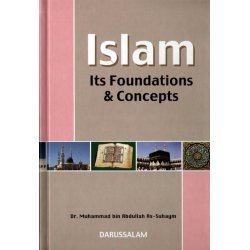
The author states his purpose in the preface: to invite people to the religion of Allah, taking his guidance from the Book of Allah and the Sunnah of His Messenger ﷺ. What follows is a comparative introduction, argued logically and without ambiguity, frank but gracious.
How It Is Built
It opens with the story of the creation of the universe and of man, the favor Allah showed him by sending Messengers, and the state of the religions that came before Islam. Only then does it introduce Islam itself — its meaning and its pillars.
That order is deliberate. A reader who understands the sequence of revelation encounters Islam as the completion of something rather than as a competitor to it.
The Distinction the Author Draws
One passage is worth quoting the substance of, because it is the book's most striking argument.
The adherents of every religion call others to it and believe truth resides only there. The adherents of every belief call others to follow their leader and to extol him. But a Muslim, the author says, does not call people to follow his ideology — his religion is the religion of Allah, with which Allah is pleased. And he does not call people to glorify any human being, for all human beings are equal.
"Truly, the religion with Allah is Islam." (Surah Aal-'Imran 3:19)
A Muslim inviting someone to Islam is not recruiting to a party or attaching him to a personality. That distinction changes the character of the invitation, and the book is built around it.
Who It Is For
Non-Muslims who want a substantial introduction rather than a leaflet. Muslims in da'wah who need the comparative material handled fairly. Students of comparative religion. Whoever is looking for guidance will find the evidences here; whoever is looking for the path of the Prophets will find it set out.
Related Reading



 (1)
(1)