The existence of God has occupied people for as long as there have been people, and every major religion has affirmed one god or another. Belief in a supreme being — omnipotent and omniscient — runs through human history so consistently that its absence is the anomaly rather than its presence.
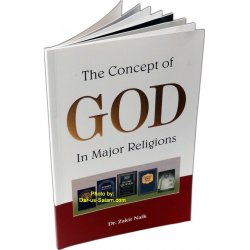
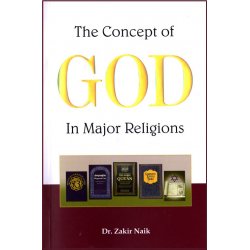
What differs is how that being is conceived. This book takes that as its subject, and approaches it from an angle most comparative works skip: it starts not with doctrine but with how people actually view God.
Five Types
The book first categorises the beliefs of the major religions into five types — a framework that turns an unmanageable mass of tradition into something a reader can hold in his head, and that makes the differences visible before any individual religion is examined.
Religion by Religion
It then describes the concept of God in each of several major faiths in turn: Hinduism, Sikhism, Judaism, Christianity and others. Each is set out as its own adherents understand it, which is the only version worth comparing anything to.
And Then Islam
The book closes with a detailed analysis of the concept of God in Islam, and the argument it makes is that Islam perfects the concept rather than replacing it — that what other traditions grasp in part, Tawhid states completely and without contradiction.
Placing Islam last is a deliberate structural choice. A reader who has worked through five conceptions of the divine arrives at the sixth with the comparisons already made in his own mind.
Who It Is For
Non-Muslims from any religious background, and from none. Muslims doing da'wah with Hindu, Sikh or Jewish friends and colleagues, who need to understand what the other person actually believes. Students of comparative religion. Full color throughout.
Related Reading



 (4)
(4)