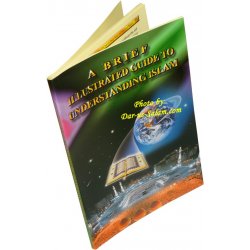
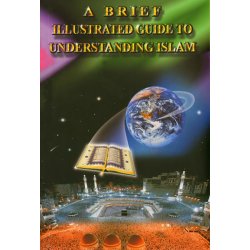
This is the book to give someone who has asked a real question about Islam and will not read four hundred pages to get an answer. It is brief, heavily illustrated, thoroughly referenced, and it has been reviewed and edited by a number of professors and specialists — which is why it has been handed out at da'wah tables for decades.
Its method is stated at the start: whether a religion is true or false should not be settled by emotion, feeling or inherited tradition, but by reason and evidence. Allah supported His prophets with signs precisely so their claim could be examined. The book invites that examination.
Chapter One — Some Evidence for the Truth of Islam
Three questions are put directly: Is the Qur'an truly the word of God? Is Muhammad ﷺ truly a prophet sent by Him? Is Islam truly a religion from God? Six lines of evidence are presented in answer:
- The scientific signs in the Qur'an — statements about embryology, geology, oceanography and the atmosphere, set against modern findings and illustrated with diagrams
- The challenge to produce a single chapter comparable to those of the Qur'an
- Biblical prophecies concerning the advent of the Prophet ﷺ
- Qur'anic statements about future events that later came to pass
- Miracles performed by the Prophet ﷺ
- The simplicity of his life — the argument from what he did not take for himself
Chapter Two — Some Benefits of Islam
What Islam offers the individual: the way to eternal Paradise, salvation from the Fire, real happiness and inner peace, and forgiveness for all previous sins.
Chapter Three — General Information on Islam
General background, correction of common misconceptions, and direct answers to the questions people raise first — among them what Islam says about terrorism and what the status of women in Islam actually is.
Who It Is For
Non-Muslims wanting a serious but readable introduction. Muslims looking for something to give a colleague, neighbor or classmate. Da'wah stalls, campus societies, prison programs and new Muslim welcome packs. Its combination of brevity, illustration and citation is what has kept it in use where longer books are started and abandoned.
Related Reading



 (9)
(9)