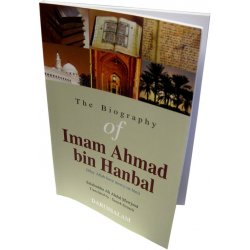
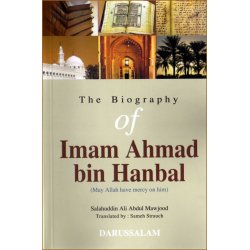
Imam Ahmad ibn Hanbal was born in Baghdad in the golden age of Islamic scholarship. Orphaned young, he was raised by a righteous mother who gave him a love of knowledge, sincerity and worship. From his youth he devoted himself to memorizing hadith, traveling through Iraq, the Hijaz, Yemen and Syria to study under the greatest scholars of his age — among them Imam Ash-Shafi'i.
Decades of study made him a foremost authority in Hadith, Fiqh, Tafsir and creed, and produced Al-Musnad, one of the largest hadith collections ever assembled.
But the reason he is called the Imam of Ahlus Sunnah is the Mihnah. Under state pressure, scholars were required to affirm that the Qur'an was created. Most complied. Imam Ahmad refused, was imprisoned and flogged over years, and did not yield — and the position of Ahlus Sunnah survived largely because one man would not say what he did not believe.
He is remembered equally for his humility and his ascetic life. A man of that standing lived on almost nothing and avoided every honor offered him.
Why Read a Scholar's Life
Knowledge does not transmit itself. It reaches us through particular people who paid a price to preserve it, and seeing how one of them actually lived changes how a reader treats what he inherited. These biographies deliberately cover not only scholarly contribution but the private side — manners, piety and worship — because those are the qualities that made the scholarship trustworthy.
The Biography of the Imams Series
Darussalam's Biography of the Imams series covers the scholars who preserved and transmitted this religion — one volume each, written to the same standard. Most are by Salahuddin Ali Abdul Mawjood. Also available:
Related Reading



 (5)
(5)