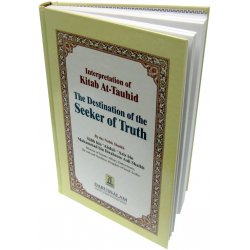
Kitab At-Tauhid is short, dense, and almost entirely composed of quoted evidence. That is its strength as a text and its difficulty as a book to read alone — the author sets down a verse and a hadith under a chapter heading and expects the reader to see why they belong together. Many readers do not.
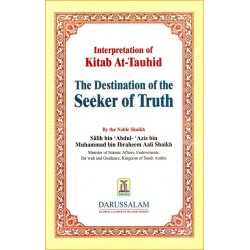
This commentary supplies what is missing. Shaykh Salih bin Abdul-Aziz Aal Ash-Shaykh works through every chapter and explains what the original author was establishing and how the evidence establishes it.
What the Commentary Does
- Explains the Qur'anic verses, prophetic narrations and statements of the early scholars that Muhammad ibn Abdul-Wahhab cited — and why each was chosen for that chapter
- Clarifies the Arabic terminology, which is where translated creed texts most often lose a reader
- Draws out the points of Aqeedah a chapter is intended to establish
- Derives the practical lessons, so the material does not stay theoretical
What It Covers
It opens with the tremendous virtue of Tawhid and its role in the expiation of sins, then with the meaning of La ilaha illa Allah beyond verbal affirmation — that true monotheism requires sincere worship, complete reliance on Allah, obedience to His commands and the avoidance of every form of shirk.
From there it follows the original through the excellence of monotheism, the conditions of the testimony of faith, fear and hope, tawakkul (reliance), ikhlas (sincerity), the love of Allah, lawful supplication, vows, sacrifices, seeking blessings, and the many issues of major and minor shirk.
Who Should Use It
Anyone studying Kitab At-Tauhid, whether in a class or alone. Its method — textual evidence combined with scholarly analysis — suits both structured study and personal reading, and it is detailed enough to serve a student of knowledge while remaining followable for a serious beginner.
If you own Kitab At-Tauhid and have started it more than once without finishing, this is the volume that gets you through.
Related Reading



 (2)
(2)