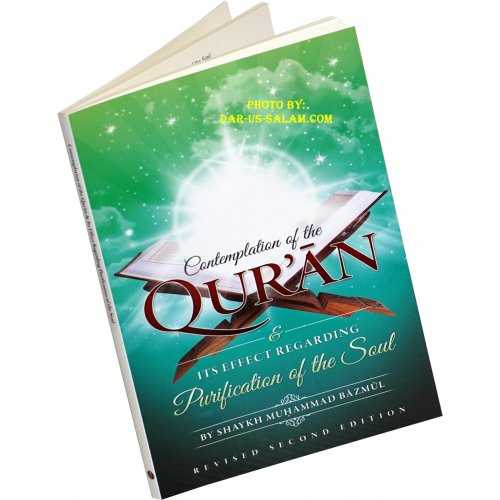
"This is a Book (the Qur'an) which We have sent down to you, full of blessings, that they may ponder over its verses, and that men of understanding may remember." [Sad 38:29]
It is known that anyone who does not busy himself with contemplation of the Great Qur'an — that is, reading it, understanding it, appreciating its meanings, and acting on it — is in opposition to the Qur'an, not a contemplator of it, and is therefore deserving of the disapproval mentioned in the sources.
Why Contemplation Is Treated as an Obligation, Not a Preference
Because the verse quoted states the purpose of revelation directly: the Qur'an was sent down that they may ponder over its verses. Recitation without reflection achieves only part of what the Book was revealed to accomplish.
The book argues that this is not a minor omission but a genuine deficiency — a person can complete the Qur'an many times over in recitation and remain untouched by it if contemplation never accompanies the reading.
What Contemplation Actually Does to the Soul
The book traces the connection between genuine reflection on the Qur'an's verses and the purification of the heart — how sustained, attentive engagement with the text softens what recitation alone does not, and why the early generation treated tadabbur as central to their practice rather than incidental to it.
Who It Is For
Any Muslim who recites regularly and wants that recitation to actually change him, rather than remain a habit performed without engagement.
Related Reading