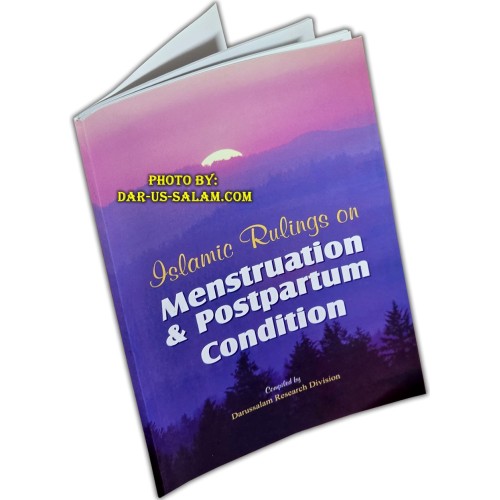
These rulings affect a Muslim woman every month of her adult life, and they are the ones she is least likely to have been taught properly. Many women guess, follow whatever their mother did, or avoid asking because the subject feels awkward — and then carry uncertainty about their prayer and fasting for years.
This guide removes the guesswork. It is compiled by the Darussalam Research Center from the Qur'an and the authentic Sunnah, and written to be consulted rather than studied.
What It Settles
- Salah — when prayer is dropped, when it resumes, and what is not made up
- Fasting — what is missed in Ramadan and how it is made up afterwards
- Qur'an — recitation, touching the mushaf, and reading from a phone or screen
- The masjid — entering, passing through, and attending gatherings
- Hajj and Umrah — Tawaf, the other rites, and what to do if bleeding starts mid-pilgrimage
- Marital relations — what is permitted and what is not
- Ghusl — how purification is performed and when worship resumes
The Borderline Cases
Most real confusion is not about the ordinary month but about the irregular one — bleeding that stops and restarts, spotting outside the usual days, bleeding that runs long, and the difference between menstruation, postpartum bleeding and istihadah, which carries entirely different rulings. The book distinguishes these clearly, which is precisely where a general fiqh chapter usually leaves a reader stranded.
Treated With Dignity
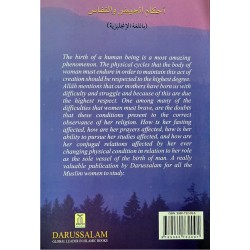
Islam does not treat these conditions as shameful. Allah has honored mothers for what they endure, and the legislation accommodates these natural stages with mercy rather than penalty — a woman who does not pray during her menses is obeying, not falling short. The book keeps that framing throughout.
Written in plain English for young Muslim women, new Muslims, mothers, teachers and students of Fiqh an-Nisa'. Suitable for sisters' study circles, Islamic schools and family libraries.
Related Reading