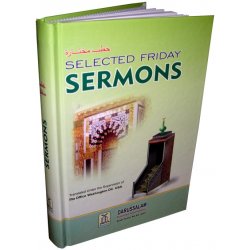
Delivering a khutbah in English is harder than it looks, and the difficulty is not language. It is that a sermon has to do two things at once: increase the congregation's faith, and be reliably correct. Many are one or the other. This collection was assembled to help with both.
Where the Sermons Come From
They are drawn from the khutbahs of the Prophet Muhammad ﷺ himself, from his Companions, and from prominent scholars. That sourcing is the book's central value: a khateeb working from these is not improvising, and is not passing on something he half-remembers hearing.
What a Khutbah Is Supposed to Do
Every Muslim who attends Jumu'ah wants his faith increased by exhortation that inspires and encourages — and at the same time wants to be sure that what he is being told is Islamically correct. Those two expectations are the standard the Friday sermon is measured against, and the sermons here are chosen to meet both: educational and heart-moving together.
How Imams Actually Use It
Few khateebs read a sermon verbatim, and the book works better as material than as a script. A sermon here supplies the theme, the structure, the evidences and the emphasis; the khateeb adapts the length, the examples and the register to his own congregation. Over a year it also solves the quieter problem — the tendency to return to the same handful of subjects because they are the ones you have prepared.
Who It Is For
Imams and khateebs in English-speaking congregations, especially in the West. Community members who take turns delivering the khutbah at a small masjid, university MSA or workplace prayer room — often with limited training and less preparation time. Students of knowledge learning how a sermon is built. Also useful for anyone giving Islamic lectures or halaqah talks.
Related Reading