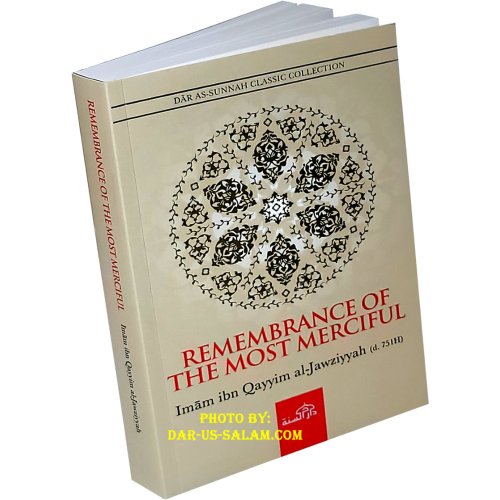
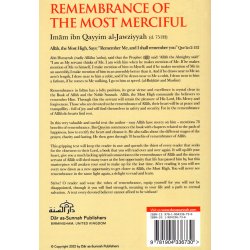
Allah, the Most High, says: "Remember Me, and I shall remember you" (Qur'an 2:152).
Abu Hurayrah رضي الله عنه narrated that the Prophet ﷺ said that Allah the Almighty said: "I am as My servant thinks of Me. I am with him when he makes mention of Me. If he makes mention of Me to himself, I make mention of him to Myself; and if he makes mention of Me in an assembly, I make mention of him in an assembly better than it."
Remembrance in Islam has a lofty position; its great virtue and excellence are crystal clear in the Book of Allah and the Noble Sunnah.
Why Ibn Al-Qayyim on This Subject
Because he treats dhikr as a discipline with effects rather than as a devotional extra.
His characteristic method is to work through what a practice does — to the heart, to a person's resistance to sin, to his experience of difficulty — and to trace each claim to a text. The result is a case rather than an exhortation.
What Is Covered
The virtues of remembrance, its forms, its times, the particular adhkar established in the Sunnah, and the states it produces in a person who persists with it.
He also addresses the obstacle everyone actually has: that remembrance is easy to begin and difficult to sustain, and that the mind wanders.
Who It Is For
Any Muslim who has intended to establish a daily routine of remembrance and not managed it. This is among the most useful books available on the subject, from among the most careful writers in the tradition.
Related Reading