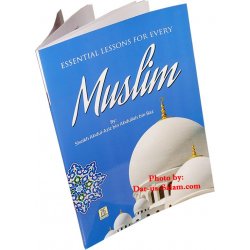
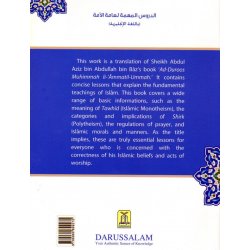
The Arabic title translates as The Important Lessons for the Generality of the Ummah, and it is precise. Shaykh Abdul Aziz bin Abdullah bin Baz was not writing for students of knowledge. He was writing the minimum that every Muslim must know — the things a person cannot practice his religion correctly without.
Each lesson is short. Together they form a complete short course.
The Lessons
- Memorization of the shorter surahs
- The declaration of faith, and what it means
- The categories of Tawhid — and of shirk, with its implications
- The pillars of Islam and the pillars of Iman
- The conditions, obligations and invalidators of wudu
- The obligations of the prayer, the tashahhud, the Sunan of prayer, and what invalidates it
- Moral values and Islamic manners
- A warning against shirk and acts of disobedience
- Preparing the deceased for burial
Why This Selection
The list is worth examining, because the choices are deliberate. Prayer receives four separate lessons — conditions, obligations, Sunan, invalidators — because prayer is performed five times daily and performed wrongly by a great many people who have never been taught it properly.
The final lesson, preparing the deceased for burial, sits there for a similar reason. It is a communal obligation that a Muslim community must be able to discharge, and in many places almost nobody knows how. Shaykh Ibn Baz included it because someone in every community needs to.
How It Is Used
This is one of the most widely taught introductory texts in the Muslim world. Its short lesson format was designed for exactly that — a teacher can take one lesson per session, and a self-studying reader can work through it at the same pace without losing the thread.
These are truly essential lessons for anyone concerned with the correctness of his beliefs and his acts of worship. Not the beginning of an education, but the floor beneath one.
Related Reading



 (4)
(4)