Every Prophet was given a sign, and challenged his people with it. Some were given more than one, as definite proof that they had been sent by Allah. But each sign was meant for the people of its own time, and when that Prophet died his signs ceased to exist.
One remains. The inimitable Qur'an, given to the Prophet Muhammad ﷺ, preserved complete by the command of Allah until the Day of Resurrection — so that anyone living after his death can see it, read it, and judge for himself.
The Questions the Book Puts
Who was the teacher who taught the Prophet ﷺ the scientific facts the Qur'an describes? Did he possess tools of research that let him discover them? Did he have aircraft and rockets that let him find out what lies beyond the sky?
The questions are rhetorical, and they are also fair. They are exactly the questions a skeptical reader should be asking, and putting them plainly is more effective than avoiding them.
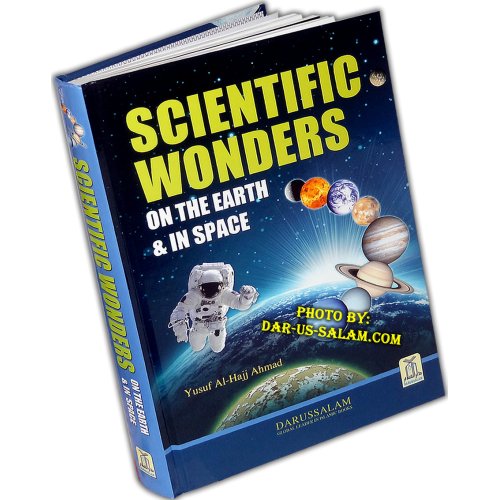
What Is Examined
Verses concerning the earth — its structure, its mountains, its atmosphere, the water cycle and the processes that shape it — and verses concerning space: the expansion of the universe, the orbits, the origins of the heavens, and what lies beyond direct observation.
The answer the book offers is that this is knowledge which falsehood cannot touch, because it is the word of God. What was said of the past and present signs, in the universe and within ourselves, science has since established as fact — and the signs still ahead will be found in the same way.
Who It Is For
Readers with a scientific training. Students who meet the opposite claim on campus every term. Da'wah among people who respect evidence. Families and Islamic schools, where the subject engages older children.
Related Reading


 (1)
(1)