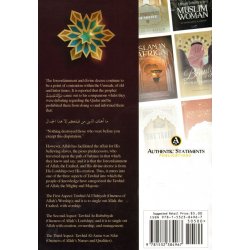
The foreordained and divine decree continue to be a point of contention within the Ummah, of old and later times. It is reported that the Prophet ﷺ came out to his Companions while they were debating regarding Al-Qadar, and he prohibited them from doing so, informing them:
"Nothing destroyed those who were before you except this disputation."
The Path of Balance
However, Allah has facilitated the affair for His believing slaves — the pious predecessors — who traversed upon the path of balance in what they know and what they say: that the foreordained of Allah, the Exalted, and His divine decree is from His Lordship over His creation.
Thus it enters into one of the three aspects of Tawhid into which the people of knowledge have categorized the Tawhid of Allah, the Mighty and Majestic.
The Three Aspects of Tawhid
- Tawhid Al-Uluhiyah (Oneness of Allah's Worship) — to single out Allah, the Exalted, with worship
- Tawhid Ar-Rububiyah (Oneness of Allah's Lordship) — to single out Allah with creation, ownership and management
- Tawhid Al-Asma was-Sifat (Oneness of Allah's Names and Qualities)
Al-Qadar belongs to the second. That placement is the key the whole subject turns on: divine decree is not a separate doctrine to be argued over in isolation, but an expression of Allah's Lordship — His creation, ownership and management of all that exists.
Why the Warning and the Obligation Coexist
Because there is a real difference between believing correctly in Al-Qadar and arguing endlessly over its finer philosophical points in a way that produces doubt rather than certainty. Sound belief holds together, without contradiction, that Allah has decreed all things and that human beings genuinely choose and are responsible.
Who It Is For
Students of creed, and any Muslim who has struggled with the apparent tension between divine decree and human responsibility.
Related Reading