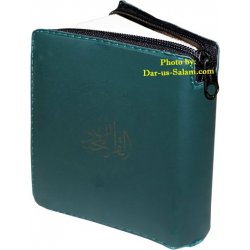
A small mushaf that survives being carried, in the page layout memorizers rely on.
Why the Zipper Case Matters
Because a mushaf in a bag takes damage at the corners and the spine within months, and most people stop carrying one for exactly that reason.
A zipper case solves it completely. The book stays closed, clean and protected, and it can go into a rucksack, a suitcase or a car without a second thought — which means it actually travels rather than staying at home.
Why 16 Lines
The Hafizi layout is what those memorizing the Quran use, and the reason is page consistency: every page begins and ends at the same point in every 16-line copy. A hafiz builds a visual memory of the page itself, and switching to a mushaf with a different line count disrupts recall.
Anyone who has memorized from a 16-line copy should keep using one, and this is that layout in a size that fits a pocket.
The Script
Indo-Pak (Persian) script — the letterforms taught across Pakistan, India and Bangladesh.
Other 16 and 17-Line Editions in Persian / Indo-Pak Script
These share the same page layout as this edition — the Hafizi layouts, used by those memorizing the Quran. Because the pages break in the same places, a reader can move between them without disturbing his memorization.
Fewer lines means larger text, but the pages break differently — so anyone who has begun memorizing should stay with the line count he learned from. Also available in 11 line, 13 line and 15 line.