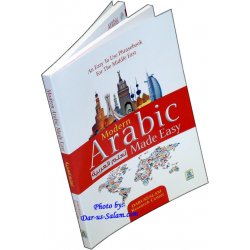
A student can complete a full course in classical Arabic, read a page of tafsir, and then stand in a shop in Jeddah unable to buy anything. The two skills are related and they are not the same, and most Islamic Arabic courses only teach the first.
This book teaches the second.
What It Covers
Modern Arabic as it is spoken in the markets, in the streets, in offices, at airports, in hospitals and in the public places of the Arab world today. Practical, current, and aimed at getting something done.
How It Teaches
Through conversations between people in different places. That is the whole method, and it is the right one for spoken language — a dialogue shows you the exchange, including the reply you will actually receive, which a vocabulary list does not.
Each conversation is given three ways: in Arabic script, in transliteration, and in translation. The transliteration is what makes the book usable immediately by someone who cannot yet read the script fluently — he can say the sentence today and learn to read it later.
Who Needs It
Pilgrims traveling for Hajj or Umrah, who will spend two weeks needing to ask directions, understand announcements and explain problems. Anyone working or studying in an Arab country. Students of classical Arabic who want the spoken register alongside it. Travelers, and families visiting relatives.
It also complements a Qur'anic Arabic course rather than competing with one — the vocabularies overlap more than beginners expect, and hearing a root in a market fixes it more firmly than meeting it in a grammar table.
Related Reading