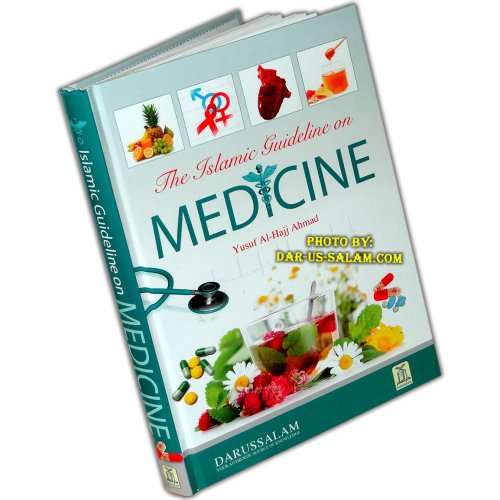
The question in the opening line is a real one and rarely asked properly.
Is Islamic medicine medical knowledge wholly subject to the will of Allah? Is it the art of treatment as Muslims practiced it at the height of their civilization? Or is it the most modern medicine available, guided by and fully in accordance with divine teaching?
Most discussions assume the second and end up nostalgic. This book takes the question seriously and answers it structurally.
The Six Categories
Working from Islamic teaching in the light of the Qur'an and Sunnah, the author derives six criteria for what deserves the name:
- Adhering to Islamic teachings and etiquette
- Adhering to logic in the practice of medicine
- A holistic approach — equal attention to body, mind and soul, for individuals and for societies
- A universal approach — taking account of all resources and aiming to benefit all people
- A scientific approach — logical conclusions drawn from sound observation, accurate statistics and trustworthy experience
- Excellence — achieving what other kinds of treatment have failed to achieve
What the Framework Rules Out
Read carefully, these criteria are as notable for what they exclude as for what they include. A remedy is not Islamic because it is old, or because it is natural, or because a hadith can be attached to it after the fact. The third, fifth and sixth conditions require it to work, and to be shown to work.
That is a considerably more demanding definition than the one in general circulation, and it is the reason this book is useful to a medical professional rather than only to a general reader.
Who It Is For
Muslim doctors, nurses and medical students working out what their religion asks of their practice. Readers navigating claims made for prophetic and alternative medicine. Anyone who wants a principled framework rather than a list of remedies.
Related Reading


 (2)
(2)