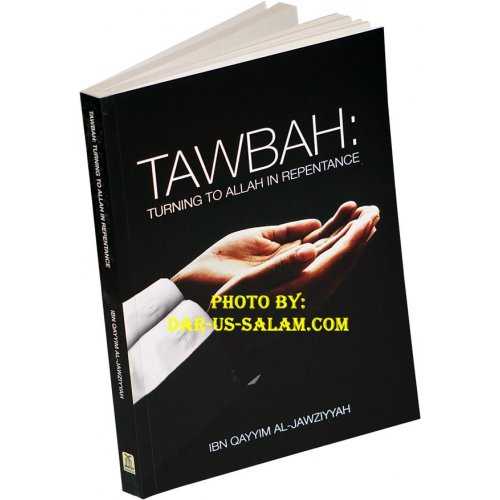
Every human being is susceptible to making mistakes. The Qur'an does not pretend otherwise — it gives people hope, and teaches them to ask Allah to take care of them and guide them on the right path.
Where This Comes From
The text is taken from Madarij As-Salikin bayn Manazil Iyyaka Na'budu wa Iyyaka Nasta'in — The Stages of the Travelers Between the Stations of You alone we worship and You alone we ask for help — which is among Ibn Al-Qayyim's best works and one of the great books of the Islamic library.
That original is enormous. Extracting the treatment of repentance and issuing it separately makes accessible to an ordinary reader something he would otherwise never reach.
Both Halves
The book's stated approach is what distinguishes it. It addresses the spiritual aspects of tawbah without neglecting the physical requirements and conditions.
That balance is rarer than it sounds. Treatments of repentance tend to be either legal — the conditions, the timing, what must be returned to whom — or entirely inward, concerned with regret and feeling. A person given only the first can satisfy every requirement and change nothing. A person given only the second can feel a great deal and never restore what he took.
Ibn Al-Qayyim deals with the apparent and the deeper aspects together, and with the true essence of repentance and its conditions, supported throughout with extracts from the Qur'an and the words of the Messenger of Allah ﷺ.
Who It Is For
Anyone carrying something. Readers caught in the cycle of repenting and relapsing. Students of knowledge and of tazkiyah. Imams and counselors who are asked about this constantly and want a scholarly answer rather than reassurance.
Related Reading